AI kids can hold: Childhood shouldn't be a prompt field, but what if it was a crank?
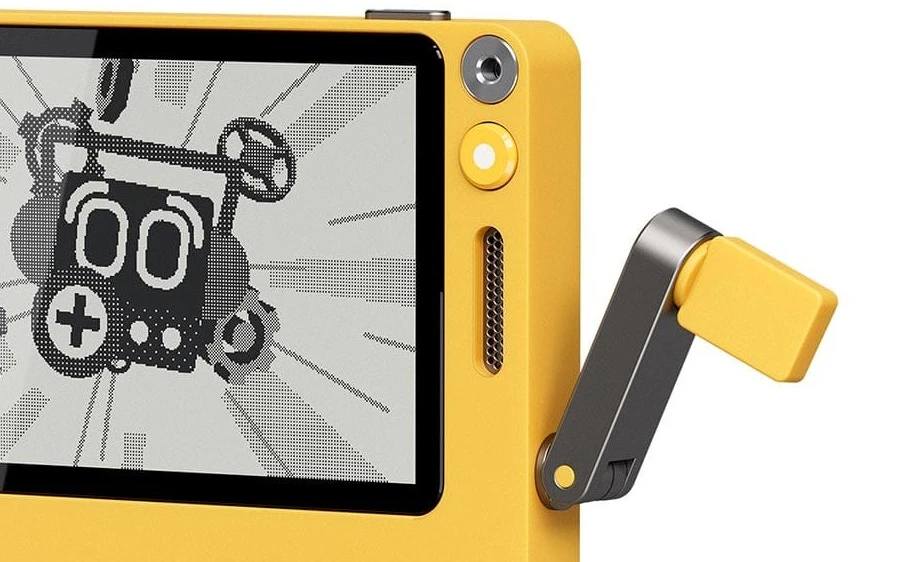
Close-up of a yellow Playdate handheld with its crank folded out
Childhood shouldn't be a prompt field, but what if it was a crank?
A camera? A walkie-talkie? A magnifying glass?
Kids shouldn't spend their childhood typing into text boxes. Yet that's where almost all AI lives today: an empty field and a blinking cursor. Children don't think in prompts. They turn things, point things, talk into things and look through things.
At FINH we've been designing for children for nearly ten years, and putting childhood first feels more important than ever. The next wave of kids' tech isn't only about keeping children away from screens. It's about giving their hands, minds and imagination more to do.
The chat box is the wrong shape for a child
A text box assumes a lot. That you can read and type. That you know what you want. That you can put it into words before anything happens. Adults find that hard enough. For a child, a blank field puts all the work up front and all the fun behind it.
The problem isn't the AI. It's the shape we've given it. And shape is a design decision.
Borrow actions kids already know
Every object a child already knows comes with an action they already understand. Turn it. Point it. Listen to it. Talk into it. Look through it. Nobody needs a tutorial for a crank.
A crank is pure cause and effect: you turn it, something happens, and you can feel it happening. A camera turns looking into asking, because pointing at something is really asking "what is that?" Put AI behind one of those actions, and something very new feels obvious.
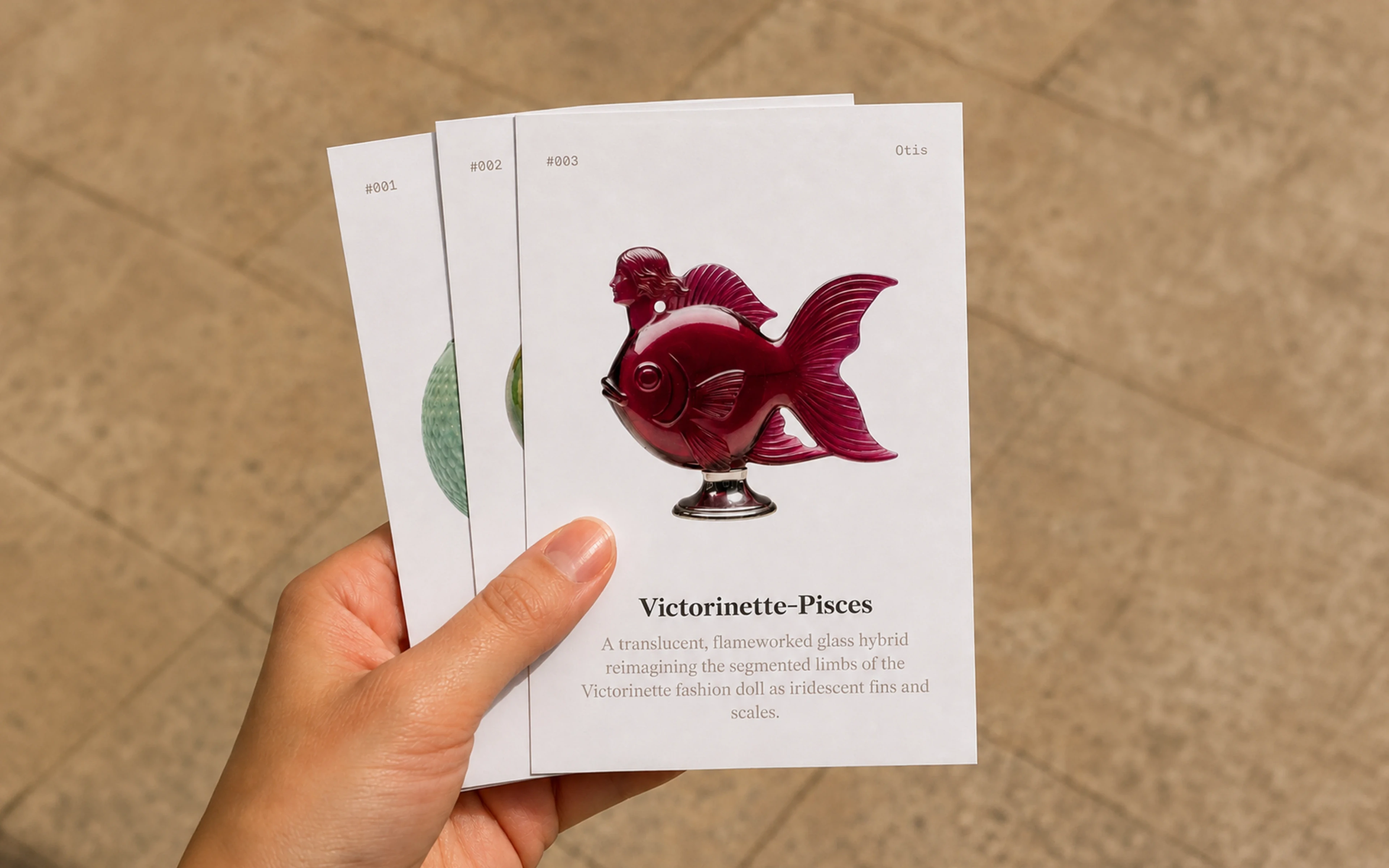
We tried this with a crank at the Young V&A, where turning a handle merged two museum objects into a new one and printed it as a card to take home. And with ASH, a pocket field guide that works like a point-and-shoot camera: snap a bee or a mushroom and it becomes an animal card to collect.
Let the object set the edges
The hardest part of AI for kids is trust. A parent needs to know what it can and can't do, and a chat window can do almost anything.
An object can't. A device that does one thing well has its limits built in: you can see them, hold them and explain them. That's why I think the most trustworthy AI for children will be single-purpose. ASH is its own device, not an app on a phone. FABA+, the screen-free audio player we designed for FABA, works with big buttons and story characters you place on top, and it's now in over 100,000 families. Neither asks a child to navigate anything.
A lot of kids' products are maps: clear steps, fixed outcomes, do this, get that. I'd rather build compasses. Safe edges, open middle. The edges come first, so the middle can be as open as a child's imagination.

Let them make, not just consume
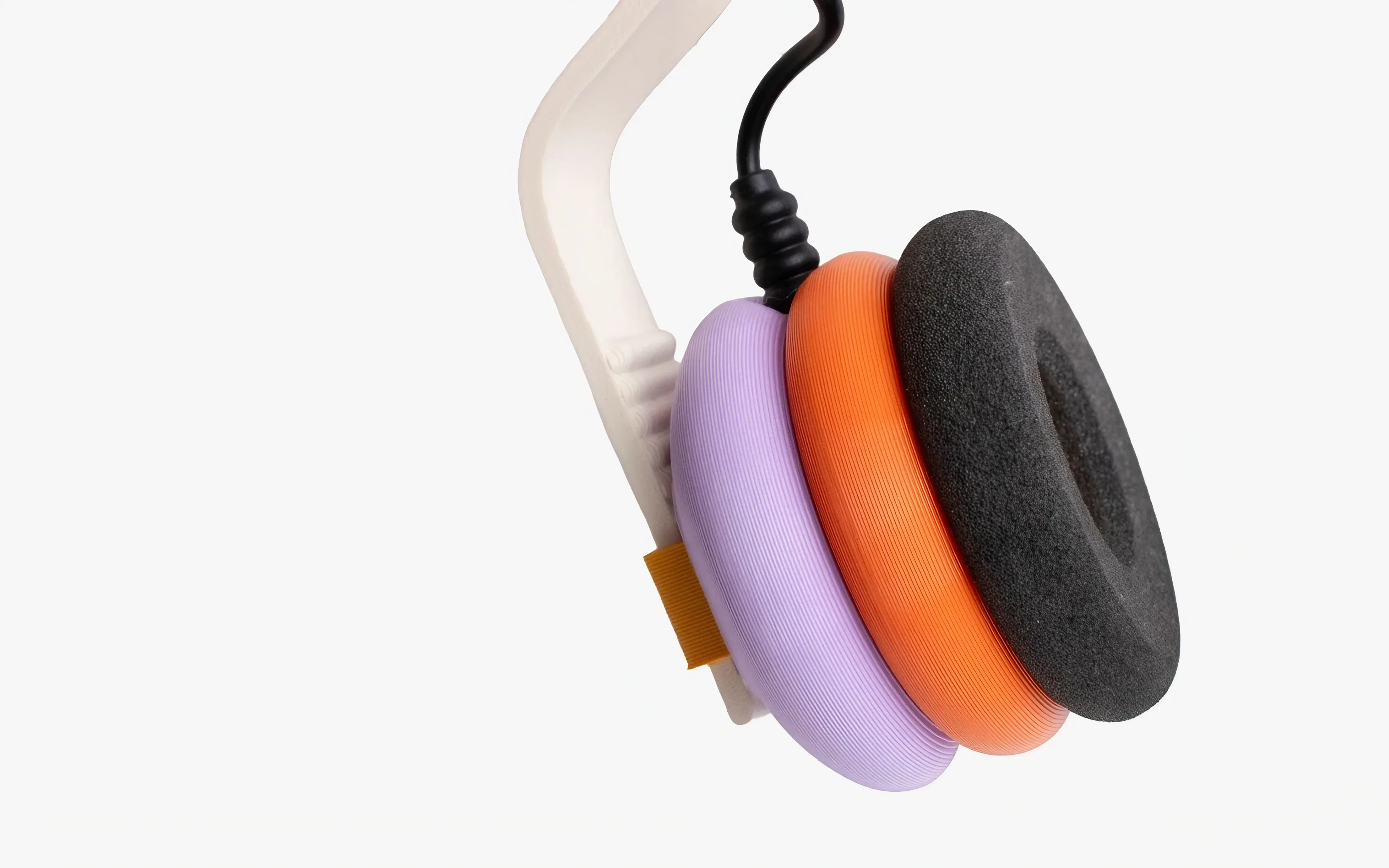
Most tech asks kids to consume. The best kids' AI should leave them holding something they made: a card, a sound, a discovery. With Kibu and DIY.ORG, kids build their own headphones first, then create in a sound lab with AI activities. The making comes before the AI, not instead of it.
Take it outside
Talking is the first interface every child learns, and a walkie-talkie turns it into a game. A magnifying glass makes the world up close worth talking about. ZigZag Go is both: an AI exploration device that takes kids into the garden, the park and the walk to school. It launches Christmas 2026 across Europe and the US.

Early, on purpose
We started exploring this in 2021 and 2022, before AI interfaces were the conversation they are now. The question still feels like the right one: maybe the future of AI for kids isn't better prompts, but better ways to play.
It's brilliant to see so many teams, from Yoto and tonies to Tin Can and Karri, rethinking what technology for children can be.
So here's the question I keep coming back to: what could we discover if we designed AI around curiosity, rather than commands?
See the projects: V&AI · ASH · FABA+ · Kibu × DIY · ZigZag Go
Made with the FINH team and our partners at the Young V&A, FABA, Kibu, DIY.ORG and ZigZag.
Cover image: Panic.