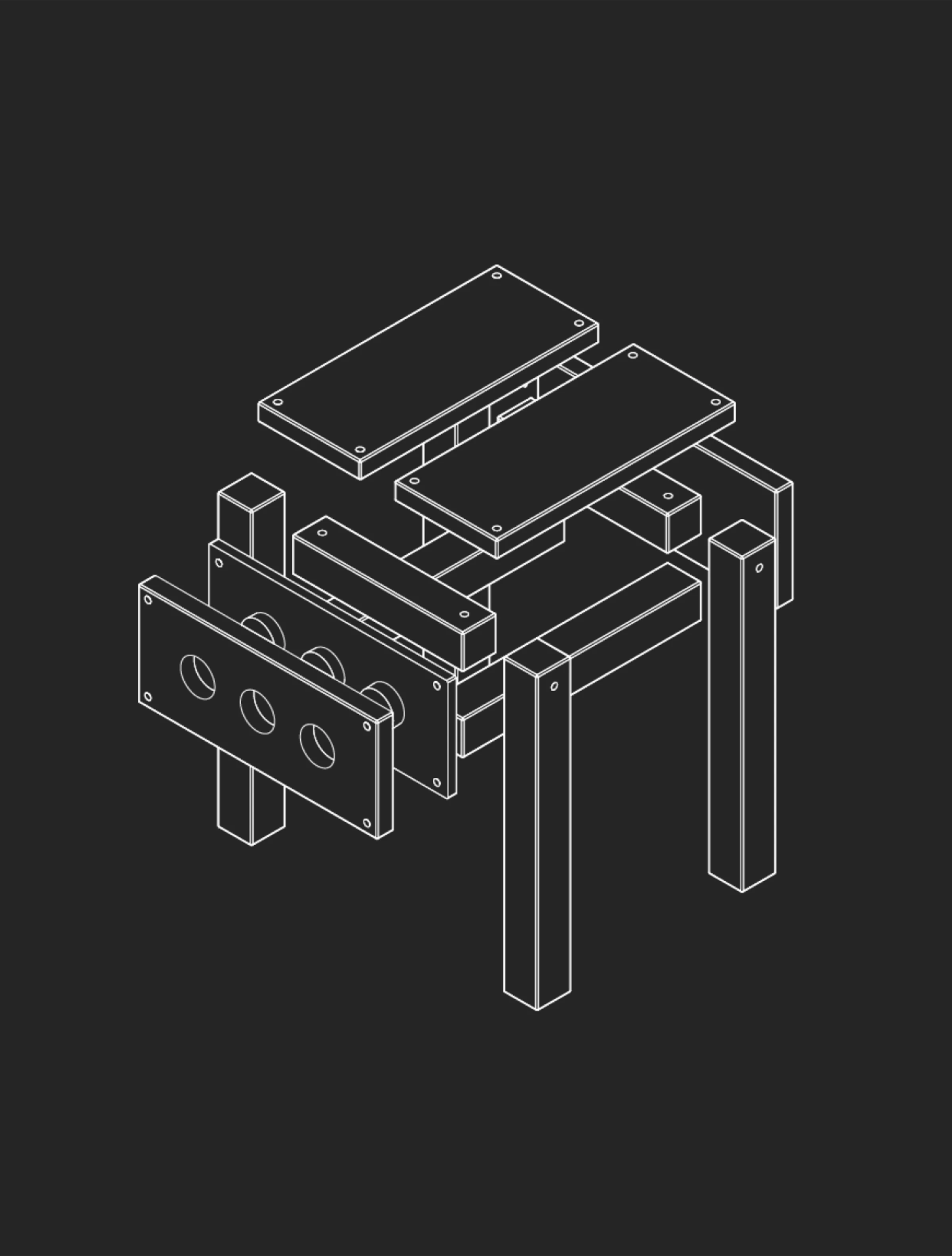
Design for Assembly (DFA)
Design Processes
Designing a product so it goes together quickly, correctly and with as few parts as possible.
In practice
Design for assembly looks at the whole product and asks how it is built up: how many parts, how they locate, whether they can be fitted wrong, how long each step takes. Fewer parts that self-align and snap together beat many that need fixings and fixtures. It is where most of a product's labour cost is decided, and it is why well-designed things feel inevitable when you open them.
Questions
What is Design for Assembly (DFA)?
DFA is the discipline of reducing part count and simplifying assembly operations so a product can be built faster, more reliably and at lower cost.
Why do you use Design for Assembly (DFA)?
Every part is a purchase, a stock line, a step and a chance of error. Removing one removes all of that.
How do you use/apply Design for Assembly (DFA)?
Question every part's existence, combine where possible, design self-locating features and snap fits, make wrong assembly impossible, and time the build on a prototype.
When do you use Design for Assembly (DFA)?
Alongside DFM, from architecture onward — assembly strategy shapes the part breakdown.
Who uses Design for Assembly (DFA)?
Industrial designers, mechanical engineers and production engineers.